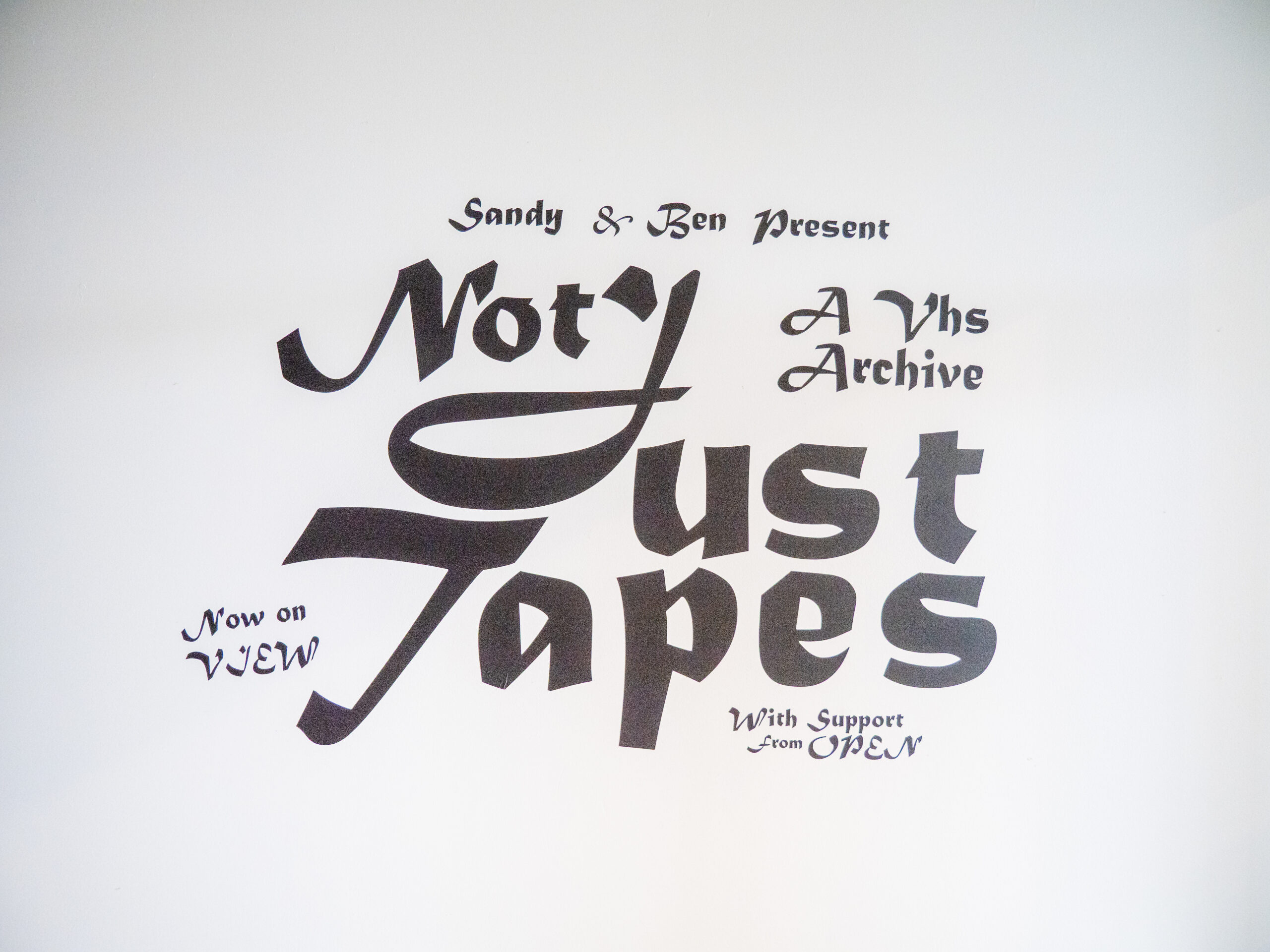
Not Just Tapes
In collaboration with Providence Art, Culture and Tourism, AS220, and OPEN
July 11 - August 16, 2026
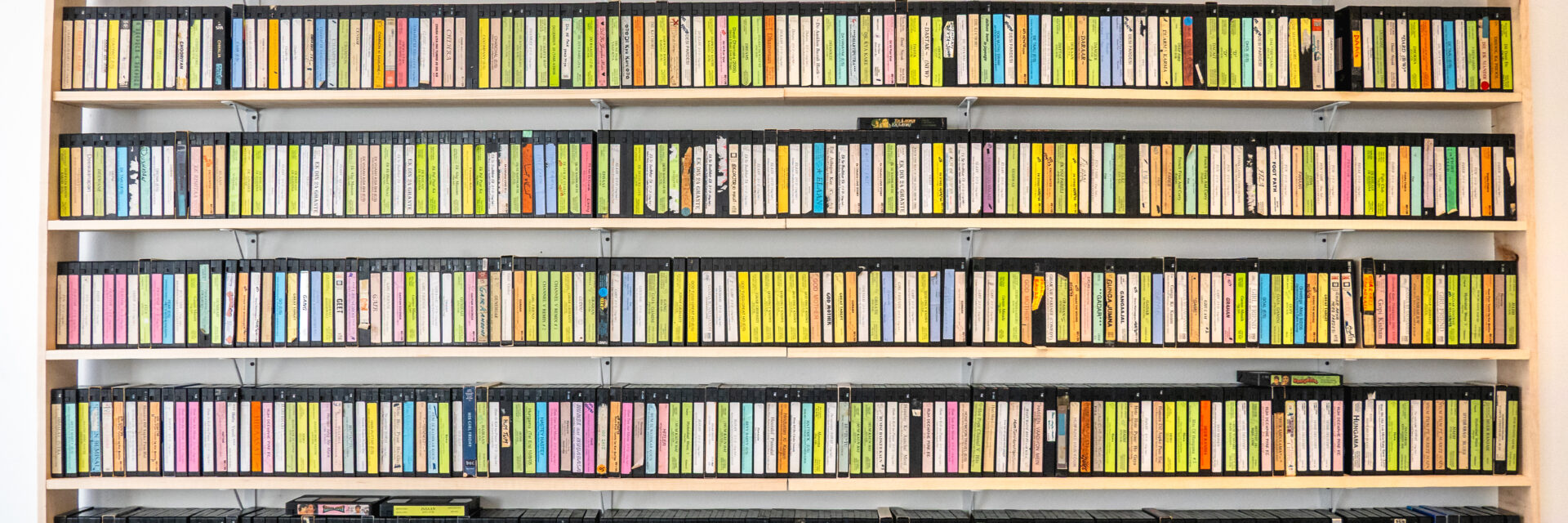
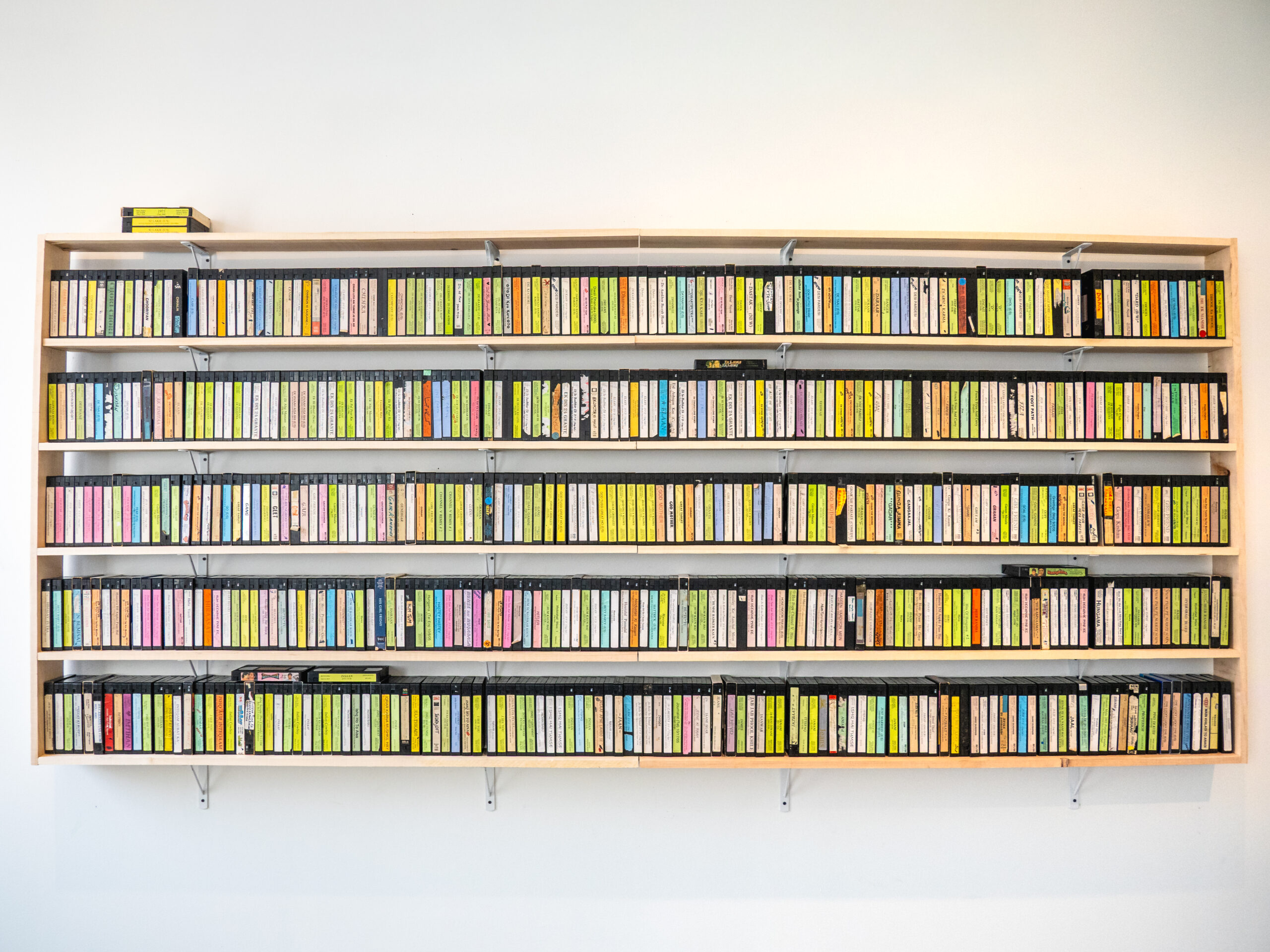
Somewhat recently, artist Ben Sisto was tipped off to the presence of “many” VHS tapes in the basement of the Hope St. restaurant, Not Just Snacks. Ben visited owner Mohammed Islam and was shown a wall packed with Hindi-language bootlegs. Arranged neatly in rows, their faded labels read like a lost Agnes Martin painting. If you squint, it looks like a gene sequencing image. A real “Wow!” moment. A handshake deal was made, and Ben left with over 600 tapes. Ben shared an image of the tapes on a listserv and was promptly contacted by Sandy Dahari, a video editor who’d just been “shocked back to adolescence.” Sandy recalls, “I was no longer a 37-year-old Providence transplant, but again a Guyanese-American pre-teen intensely perusing titles in a small Indian-owned video store in New Jersey. I would’ve never thought to see these kinds of tapes again, not in 2026.”
Back when young Sandy was grabbing these tapes five for $10, they were the only way to access films of the 60s and 70s—a Bollywood golden age not yet available on DVD. No YouTube. In contrast with American individualism, Bollywood musicals told stories of unrequited lovers, familial strife, and diasporic struggles while underlining cultural principles like honoring parents and remembering one’s homeland. As Sandy explains: “South Asian-Americans, like all immigrants, are demanded to assimilate, to make ourselves palatable. Simultaneously, elders, guilt, and nostalgia demand that the culture and values of the homeland take precedence. To be of the diaspora is to be between. Between-ness is fuzzy, and here the lo-res quality of bootleg video recalls a specific moment in time, while also addressing the wobbliness of existing between cultures and generations.”
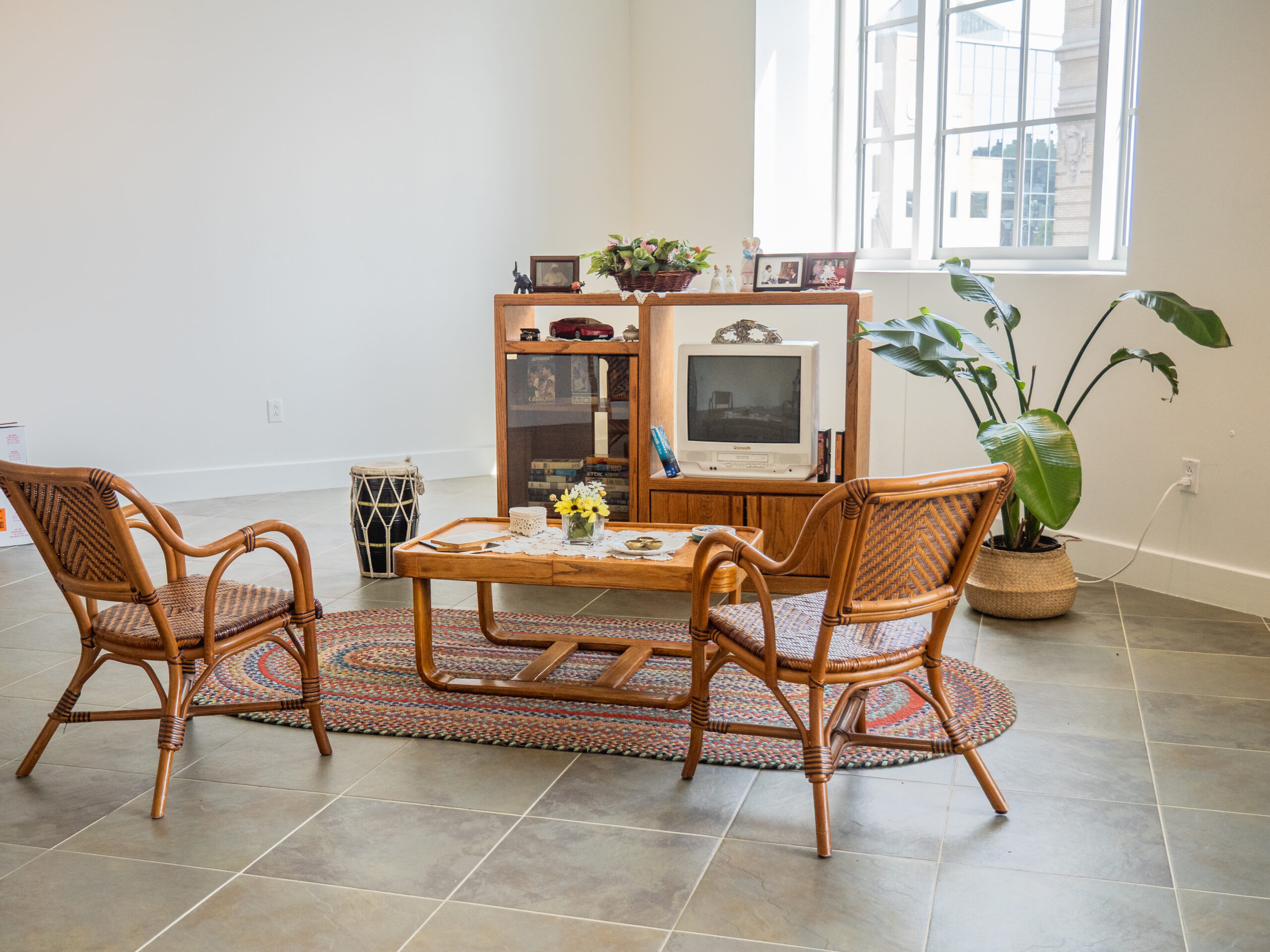
Not Just Tapes invites viewers to examine concepts of home and identity in the context of an abstracted living room. Whereas the outside world demands accepting the underlying discomfort in cultural conformity, the living rooms of immigrants are often carefully curated to soothe that discomfort. These rooms often contain literal altars, but they are altars themselves, decorated with figures, flags, portraits, collectibles, all touchstones to the homeland. Grab a tape from the TV console, pull up a chair, and get comfortable. Be kind, rewind.
I think public spaces in general are so important. And the Library tends to cultivate a safe space, along with being a public space. So being an artist coming into that kind of space, I feel very secure being able to show my work, talk to the public . . . everyone just wants to learn and grow together. And that's a really, really cool thing.