
Emmanuel - A PPL Alum Story
"The opportunity I had as a teaching assistant and my experience with PPL is something I don't think I would be able to get anywhere else and I think that the information and what I've learned from PPL I can transfer into the real world."
Emmanuel's StoryMobile Learning
Overview
Mobile learning (Mlearning) is the use of digital learning resources that are designed for cell phones, smartphones, and tablets. Learning with mobile devices increases access to education by reducing the usual barriers of time, place, language, internet access, and WiFi service. Videos, gamified learning applications (known as “apps”), online courses, curated resources, and podcasts are among the learning resources that can be used in Mlearning. The choice of digital content can be personalized to the interests and skill level of the learner. Mlearning can also provide an onramp to employment and career advancement for adults by offering access to basic skills learning, vocational training, and even career coaching.
Public libraries can play a pivotal role in Mlearning through access and curation of resources, access, promotion, and support. Although accessing information through mobile devices is ubiquitous, adults often need guidance and support in locating and effectively using high-quality digital learning resources. Effective Mlearning resources present bite-sized content, have simple navigation features, and limit the amount of text on a screen. Libraries can help adults select and use digital resources, and offer a continuum of support from light-touch intervention to one-on-one tutoring.
Conditions for Success

 Staff introducing mobile learning to patrons are knowledgeable about the apps available and are able to patiently assist with their download onto a variety of devices. Unless there are designated hours for support (see Learning Lounges), staff should be available to respond to requests as they occur. Staff might also monitor the tracking data that most learning apps provide and use it to identify users whose progress has slowed. The degree to which staff can boost learner persistence by offering support depends on library capacity and the level of need for this service. (See the Learner Support section below for a range of support strategies.)
 No designated space is needed to support mobile learning.
 Training about mobile learning for information services staff, reference librarians, and other public-facing library staff consists primarily of an orientation where staff can download, use, and ask questions about the mobile apps that the library is promoting. Staff are also introduced to a range of devices that patrons may be using so that they can assist with downloading. FAQs and other written support, such as step-by-step instructions and reminders (usernames, passwords) that learners need each time they log on, are helpful for both staff and patrons.

FAQs
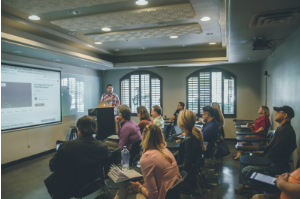
Implementation Example: Chicago Public Library
Use of learning circles at Chicago Public Library (CPL) dates back to 2014. Through a strategic planning process, the Learning and Economic Advancement Department was created to help advance new adult learning initiatives, including adult education, English language learning, digital literacy, and workforce development. In collaboration with Peer 2 Peer University, study groups were formed to deliver MOOCs to a wider and more diverse audience. These study groups became known as learning circles. Since 2015, CPL has continued to offer learning circles in library branches throughout the city. Learning circle topics address the needs of adults with low skills as a means of increasing opportunities for better-paying jobs, and of helping adults enter job training programs or college. Read More
Featured
English Now!
P2PU
Join Us!
Six libraries are invited to pilot one of the promising practices with support from the P3 team,